

Finding the perfect puzzle size for a 5-year-old can feel like searching for a needle in a haystack—if that needle were made of colorful cardboard pieces. At this age, kids are bursting with curiosity and energy, making it crucial to choose puzzles that not only challenge them but also keep them engaged. After all, nobody wants to witness a mini meltdown over a puzzle that’s too tricky or too easy!
Importance Of Choosing The Right Puzzle Size
Selecting the appropriate puzzle size significantly impacts a child’s engagement and learning. It ensures that puzzles remain enjoyable and effective for 5-year-olds.
Developmental Skills In 5-Year-Olds
Five-year-olds experience rapid growth in cognitive, motor, and social skills. Hand-eye coordination improves with puzzles, fostering fine motor development. Problem-solving abilities also enhance as children learn to strategize and visualize solutions. Social skills emerge through collaborative puzzle-solving, encouraging teamwork. Choosing puzzles that match their skills promotes confidence, motivating them to take on challenges.
Cognitive Challenges
Cognitive challenges play a crucial role in a child’s growth. Puzzles that are too simple may lead to boredom, while those that are overly complex can cause frustration. Age-appropriate puzzles stimulate critical thinking and memory retention. They encourage children to follow instructions and engage in logical reasoning, vital for later academic success. Selecting the right difficulty level supports cognitive development, ensuring children remain curious and eager to learn.
Recommended Puzzle Sizes
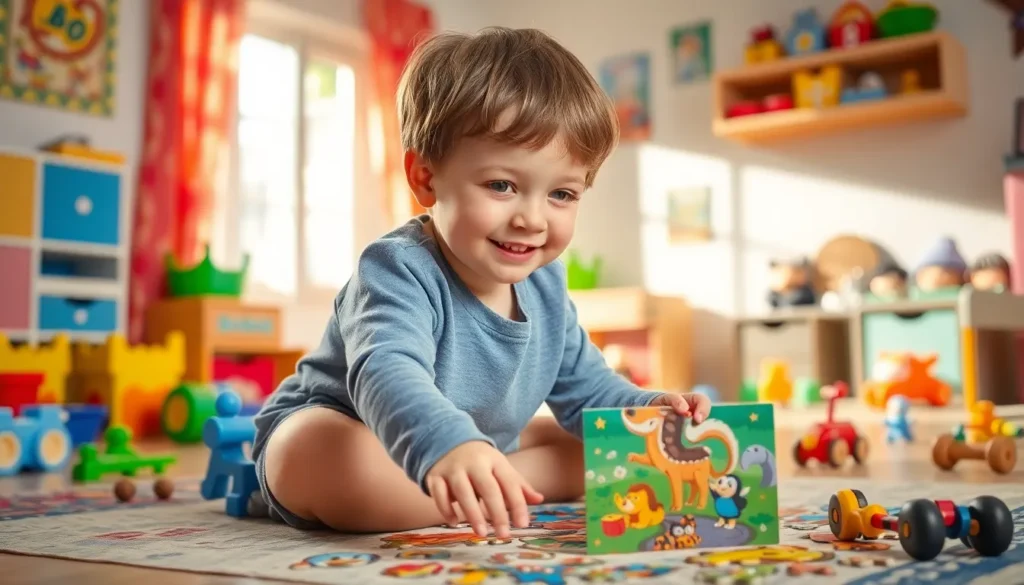
Selecting the right puzzle size for 5-year-olds enhances engagement and learning. The following sections outline suitable dimensions and influencing factors.
Standard Dimensions For 5-Year-Olds
Puzzles ideal for 5-year-olds typically range from 36 to 48 pieces. Piece sizes should measure 1.5 to 2 inches. This size allows children to manage assembly without feeling overwhelmed. Larger pieces promote fine motor skills and facilitate easier handling. Bright colors and engaging themes capture attention, making puzzles more appealing. Examples include animal, vehicle, and cartoon character designs. Puzzles within this size range effectively stimulate cognitive development while remaining fun.
Factors Influencing Puzzle Size Selection
Cognitive ability plays a significant role in selecting a puzzle size. Individual skill levels may vary among children. Interests also influence preferences, with themes resonating more with specific age groups. Parental involvement impacts choices, as adults often guide kids toward appropriate challenges. Social settings encourage collaborative play, prompting the selection of larger puzzles to accommodate multiple children. Additionally, physical space at home or school affects the ideal puzzle dimensions. When considering these factors, selecting an appropriate puzzle becomes easier and more beneficial for growth.
Best Puzzle Types For 5-Year-Olds
Selecting the right types of puzzles enhances engagement and supports development for 5-year-olds. Two popular categories stand out: wooden puzzles and jigsaw puzzles.
Wooden Puzzles
Wooden puzzles offer durability and tactile engagement for children. They often feature large, chunky pieces that are easy for small hands to grasp. Bright colors and familiar themes, like animals or vehicles, attract attention and spark interest. These puzzles frequently incorporate pegs, which help with hand-eye coordination. Furthermore, wooden puzzles encourage imaginative play through creative themes. Investing in quality wooden puzzles also promotes longevity, allowing them to withstand everyday use. Parents appreciate how these puzzles combine fun with education, making learning enjoyable.
Jigsaw Puzzles
Jigsaw puzzles for 5-year-olds typically range from 36 to 48 pieces to promote problem-solving and critical thinking. With a higher piece count, children face manageable challenges that enhance their cognitive development. Vibrant images featuring favorite characters or scenes create excitement and motivate children to complete their puzzles. Engaging with jigsaw puzzles helps improve fine motor skills through manipulation of smaller pieces. Collaboration adds another layer of fun, as children and parents can work together to complete the puzzle. Ultimately, jigsaw puzzles provide an ideal balance of challenge and enjoyment.
Tips For Enhancing Puzzle Play
Creating an engaging puzzle play experience can significantly benefit a child’s development. Encouraging a supportive atmosphere fosters a child’s confidence and creativity.
Creating A Positive Environment
A positive environment contributes to a child’s enjoyment of puzzles. Set up a well-lit, comfortable space with minimal distractions. Providing praise and encouragement when children make progress boosts their motivation. Allow flexibility in puzzle selection based on interests, as this keeps them engaged. Using thematic puzzles, such as those featuring animals or favorite characters, enhances excitement. Additionally, involving parents or caregivers during play fosters collaboration and strengthens bonds. Offering assistance without taking over ensures children feel empowered and builds their problem-solving skills.
Encouraging Problem-Solving
Encouraging problem-solving opens a child’s mind to new challenges. Pose open-ended questions, guiding them to think critically about puzzle assembly. Suggest strategies, such as sorting pieces by colors or edges, to simplify the process. Allowing children to attempt without immediate help builds perseverance. Highlighting the satisfaction of completing a puzzle reinforces their efforts. Celebrate accomplishments, even small ones, to affirm their progress. Demonstrating that making mistakes is part of learning fosters resilience and confidence. Engaging children in discussions about their choices strengthens their cognitive skills while making the activity more interactive.
Finding the right puzzle size for a 5-year-old is crucial for fostering their development. Engaging puzzles that challenge without overwhelming can spark curiosity and enhance critical skills. As children navigate through the assembly process they build confidence and strengthen their problem-solving abilities.
Parents and caregivers play a vital role in this journey by selecting puzzles that align with individual interests and cognitive levels. By creating a supportive environment for puzzle play children can explore new challenges while enjoying the process. Ultimately the right puzzle can ignite a lifelong love for learning and exploration.


