

Imagine a world where your coffee mug can transform into a mini spaceship or your living room can host a virtual dinosaur party. Welcome to the realm of AR cameras, where reality gets a playful upgrade. These nifty gadgets are not just for tech enthusiasts; they’re changing the way everyone interacts with their environment.
What Is an AR Camera?
AR cameras utilize augmented reality technology to overlay digital content onto the real world. This technology enhances perception by blending physical environments with digital elements. Users can experience interactive features, making mundane objects dynamic and engaging.
An AR camera operates by recognizing spatial data and context. It tracks movements and recognizes surfaces, allowing it to place digital objects seamlessly. For instance, a user might see a virtual painting displayed on their living room wall.
Mobile devices and specialized AR glasses commonly house AR cameras. Both types enable users to interact with immersive experiences. Numerous applications, such as gaming, education, and interior design, leverage AR cameras to improve user engagement.
AR technology is becoming more accessible, transcending barriers that once restricted it to developers and tech aficionados. Many smartphones now come equipped with AR capabilities, making it easier for everyone to access this innovative tool.
In retail, AR cameras revolutionize how consumers shop. Users can visualize products in their environment before making a purchase, effectively bridging the gap between online and in-person shopping. Additionally, educational tools use AR cameras to transform learning experiences. Lessons can become interactive, prompting greater retention of information.
As AR cameras continue to evolve, their potential expands across various industries. This advancement fosters creativity and adds layers of interaction to everyday objects, enriching how people perceive and engage with their surroundings.
How AR Cameras Work
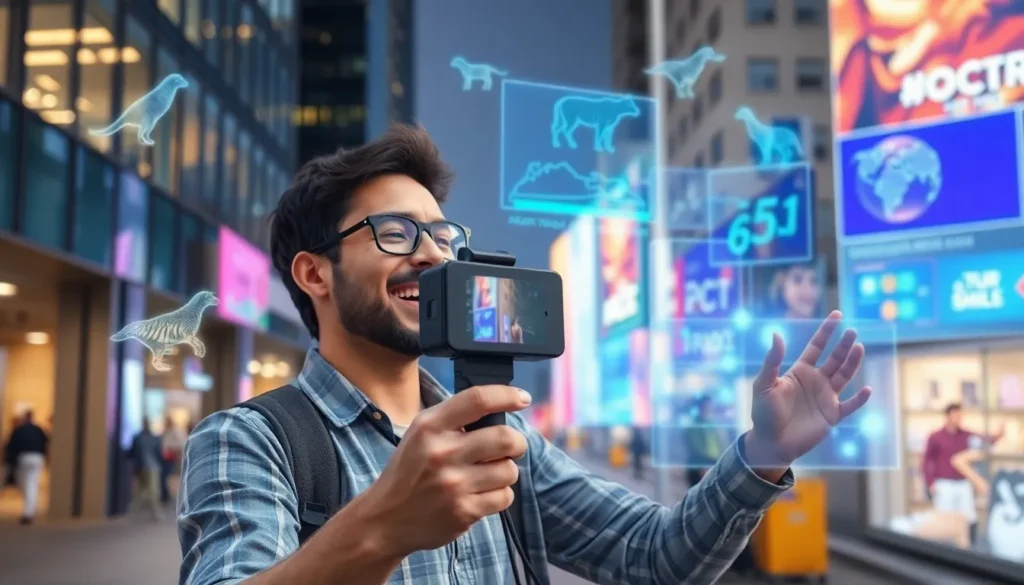
AR cameras integrate digital elements into the real world, creating immersive experiences. These cameras blend physical and digital environments seamlessly.
Key Technologies Involved
AR cameras rely on several key technologies. Depth sensing captures spatial data, allowing devices to understand the distance between objects. Computer vision enables recognition of surfaces and objects, anchoring digital content accurately. Sensors track head and body movements, ensuring that virtual elements align with real-world positions. Additionally, artificial intelligence enhances object recognition, enabling dynamic interactions. Together, these technologies provide users with rich, interactive experiences across various applications.
Differences from Traditional Cameras
AR cameras differ significantly from traditional cameras. Traditional cameras capture static images, while AR cameras overlay digital enhancements onto live video. Augmented reality requires advanced processing capabilities for real-time rendering of graphics. Traditional photography captures moments; AR transforms them into interactive experiences. Furthermore, AR cameras utilize various sensors to detect surroundings, providing a multidimensional view. As a result, users experience enhanced interactivity that traditional cameras cannot offer, reshaping how they engage with their environments.
Applications of AR Cameras
AR cameras find significant applications in various fields, enhancing experiences and interactions with digital content.
In Gaming and Entertainment
AR cameras revolutionize gaming experiences by blending real-world environments with virtual elements. Players navigate interactive scenarios where digital objects coexist with physical surroundings. Popular games like Pokémon Go illustrate this integration, allowing users to catch virtual creatures in their actual locations. Enhanced features like multiplayer capabilities further engage users, fostering social interaction through shared experiences. AR also plays a role in live events, creating immersive experiences that captivate audiences.
In Education and Training
AR cameras transform educational practices by delivering hands-on, interactive learning experiences. Students visualize complex concepts, making abstract subjects more tangible. For instance, anatomy lessons benefit from AR by allowing learners to interact with 3D models of human organs. Training programs in fields like medicine leverage AR technologies to simulate real-life scenarios, improving practical skills. Such methods enhance information retention, encouraging active participation from learners in diverse environments.
In Retail and Marketing
Retailers use AR cameras to bridge online and in-store shopping experiences. Virtual try-on features allow customers to see how clothes or accessories look before purchasing. For instance, makeup brands utilize AR apps to show users how various products would appear on their skin. In marketing campaigns, AR experiences capture consumers’ attention, leading to more meaningful interactions with brands. Enhanced product visualization helps customers make informed choices, directly influencing purchasing decisions and increasing satisfaction.
Future Trends in AR Camera Technology
Innovations in AR camera technology promise to reshape user experiences dramatically. Emerging trends center around hardware enhancements and software developments that improve functionality and accessibility.
Advancements in Hardware
New AR cameras feature improved sensors that capture depth more accurately, allowing for more realistic overlays. Enhanced processing power reduces latency, making interactions smoother and more responsive. Companies are integrating lightweight materials to create comfortable wearables, inspiring longer usage periods. Increased battery life supports sustained use of AR applications, which enhances user engagement without interruptions. As manufacturers implement these advancements, users can expect a more immersive experience in everyday applications.
Software Innovations
Software development drives the capabilities of AR cameras forward. Advanced algorithms improve object recognition and tracking accuracy, creating seamless digital integrations with real-world environments. Enhanced compatibility with various platforms ensures a broader range of applications, from gaming to education. Artificial intelligence plays a crucial role in personalizing user interactions, adapting content based on preferences and behaviors. As software continues to evolve, the potential for interactive experiences expands, fostering creativity and new applications across industries.
AR cameras are transforming how individuals interact with their surroundings by merging the physical and digital worlds. As these technologies become more integrated into everyday devices, users can expect increasingly immersive experiences that enhance creativity and engagement.
The potential applications across various sectors—from gaming to education and retail—illustrate how AR cameras are not just a trend but a significant advancement in technology. With ongoing innovations in hardware and software, the future promises even more exciting developments that will redefine user experiences. As AR cameras continue to evolve, they will undoubtedly play a crucial role in shaping the way people perceive and interact with their environments.


