

Imagine stepping into a museum where the exhibits leap off the walls and into your imagination. Augmented reality museums are revolutionizing the way people experience art and history, blending the physical with the digital in ways that are both entertaining and educational. Gone are the days of staring at dusty artifacts; now, visitors can interact with 3D models, watch historical figures come to life, and even take selfies with ancient warriors—all without the risk of getting a paper cut from a museum brochure.
Overview of Augmented Reality Museums
Augmented reality museums represent a significant advancement in the way people interact with art and history. These innovative spaces utilize AR technology to blend actual artifacts with digital information, creating rich, immersive experiences. Visitors can access interactive displays, which often provide detailed narratives about exhibits.
Many museums now incorporate AR apps, allowing guests to engage with 3D models that appear on their devices. Such applications can also offer virtual reality experiences where historical figures appear alongside artifacts. The interactive nature of these experiences helps bridge the gap between past and present, enriching educational content.
In addition to enhancing traditional exhibits, some venues host AR-driven scavenger hunts. These games encourage exploration within the museum, making visits even more engaging. By scanning QR codes, visitors unlock exclusive content and multimedia presentations.
Furthermore, augmented reality fosters creativity by enabling guests to take pictures with virtual elements. These opportunities allow for social media sharing, thereby increasing awareness and interest in museum exhibits. Enhancing the enjoyment factor, AR makes museum visits memorable events for individuals and families alike.
Collaboration between museums and tech companies evidences the growing trend of integrating digital elements. Through partnerships, institutions gain access to cutting-edge innovations, ensuring they stay relevant. This evolution signifies a shift towards interactive learning environments that captivate and educate.
Augmented reality museums demonstrate a forward-thinking approach to cultural preservation, appealing to diverse audiences. By merging technology with traditional displays, these institutions enhance visitor experiences, ensuring both educational value and enjoyment.
Key Features of Augmented Reality Museums
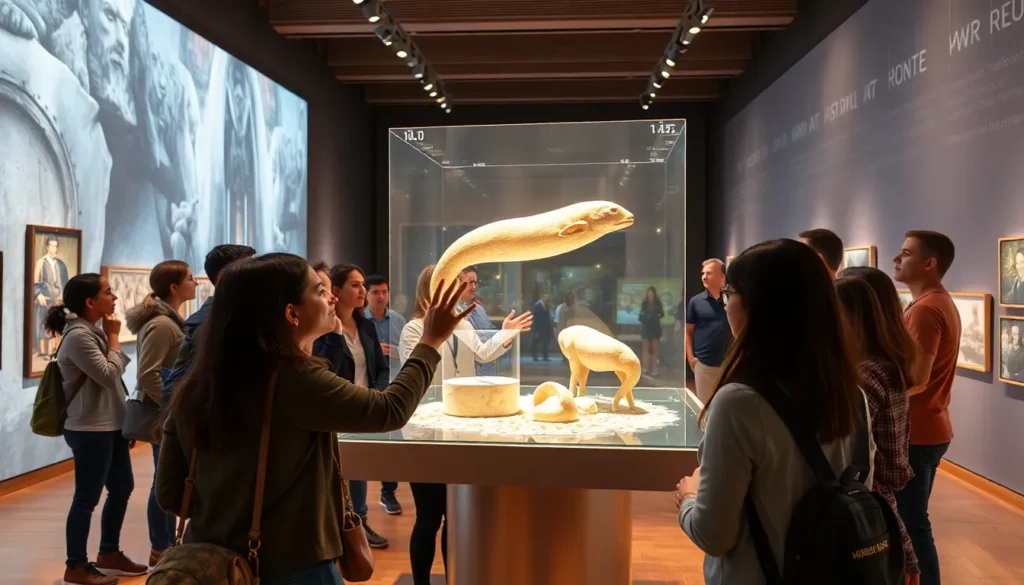
Augmented reality museums incorporate innovative features that significantly enhance the visitor experience. Two major components stand out: interactive displays and virtual guides.
Interactive Displays
Interactive displays engage visitors by making exhibits more dynamic. These displays allow guests to explore 3D models of artifacts and artworks. Users can manipulate these models to see them from various angles. Augmented layers provide additional information, such as historical context and artist backgrounds. Through the use of smartphones or AR glasses, museum-goers can interact with holograms, bringing the past to life. Interactive elements transform static exhibits into captivating experiences. Visitors actively participate, fostering a deeper understanding of art and history.
Virtual Guides
Virtual guides offer personalized experiences for each visitor. They provide tailored information based on individual preferences and interests. By utilizing AR applications, guests can access stories about specific exhibits or browse related artworks. These guides facilitate seamless navigation throughout the museum. Virtual guides can highlight points of interest, ensuring visitors don’t miss key displays. Some experiences include voice narration or video clips of experts discussing the artwork. This technology enriches the museum visit, creating memorable engagements with culture and history.
Benefits of Visiting an Augmented Reality Museum
Augmented reality museums provide numerous advantages that enrich the visitor experience significantly. These benefits transform cultural engagement into an innovative journey.
Enhanced Learning Experience
Engaging with augmented reality technology amplifies the learning experience. Visitors access interactive 3D models that illustrate historical contexts and cultural significance. Information layers supplement exhibits, offering detailed narratives at a touch. Art and artifacts come to life with vivid animations, capturing attention more effectively than traditional displays. Dynamic wandering through the museum aids in retaining information. Knowledge retention improves as guests actively participate rather than passively observe.
Accessibility and Inclusion
Augmented reality museums increase accessibility for diverse audiences. Technology allows for customizable experiences tailored to individual needs and preferences. Visitors with disabilities can enjoy features such as audio descriptions and tactile elements that enhance engagement. Language barriers diminish through multilingual content, enabling a broader understanding of exhibits. Programs designed for children foster an inclusive environment, encouraging a love for history and art from an early age. Innovative tools like AR apps bridge gaps, making cultural experiences enjoyable for all.
Popular Augmented Reality Museums Around the World
Augmented reality museums across the globe showcase innovative ways to engage visitors. The Palazzo Grassi in Venice, Italy, offers immersive art experiences through its AR applications, allowing guests to interact with 3D models of classic artworks. Meanwhile, the British Museum in London employs AR technology to bring historical artifacts to life, offering animated insights into ancient cultures.
In Japan, the MORI Building DIGITAL ART MUSEUM combines art and technology, providing visitors with interactive displays that change based on user participation. This museum emphasizes collaboration between art and technology, making it a unique destination. The Smithsonian National Museum of Natural History in Washington, D.C., features AR exhibits that enable guests to explore the museum’s vast collections in an engaging way, blending physical displays with digital enhancements.
Singapore’s ArtScience Museum integrates AR experiences that allow visitors to navigate through its exhibitions using their smartphones. This enables guests to access additional information and transformative experiences beyond traditional museum visits. The innovative Van Gogh Museum in Amsterdam incorporates AR applications that animate Sunflowers and other works, giving visitors a unique perspective on the artist’s techniques and intent.
Locations like the San Francisco Museum of Modern Art (SFMOMA) use AR for interactive scavenger hunts that engage families and groups in exploration, emphasizing education through technology. These interactive experiences cater to diverse audiences, demonstrating how AR museums prioritize accessibility and engagement.
Across continents, augmented reality museums attract attention by offering unique, enriched experiences. They not only present exhibits but also create memorable narratives that appeal to both art lovers and casual visitors.
Future Trends in Augmented Reality Museums
Emerging technologies will continue to shape augmented reality museums. Enhanced AR interactions, such as holographic displays, promise to engage visitors in unprecedented ways. Smart glasses may also enable visitors to receive real-time context about exhibits, making experiences more personalized.
Educational institutions are likely to collaborate with museums for immersive learning opportunities. Real-time data integration means students can participate in holographic experiences of historical events. Likewise, virtual reality tours that combine AR and VR may allow for deeper exploration of exhibits.
Sustainability trends could lead to eco-friendly AR implementations. Museums might utilize low-energy AR applications to conserve resources while maximizing visitor engagement. As a result, this focus on sustainability can attract environmentally conscious audiences.
Local communities may see increased involvement in AR development. Partnerships with local artists and tech startups can create unique, community-centered experiences that resonate with visitors. This localization enhances cultural relevance and promotes communal ownership of museum narratives.
Mobile compatibility will play a crucial role in future designs. More visitors will use their smartphones for interactive experiences, ensuring ease of access to augmented applications. Consequently, museums may adopt app-based features that enrich the onsite experience without requiring complex installations.
Virtual exhibitions are set to revolutionize how audiences access museum content. They provide global audiences with the ability to explore exhibits remotely, breaking down geographic barriers. This aspect of accessibility showcases the evolving landscape of cultural engagement and educational outreach.
Augmented reality museums are redefining the way individuals experience art and history. By blending physical exhibits with interactive digital elements, they create engaging environments that captivate diverse audiences. These innovative spaces not only enhance educational value but also foster a deeper connection to cultural heritage.
As technology continues to evolve, the potential for augmented reality in museums will expand, offering even richer experiences. With a focus on accessibility and personalization, these museums are paving the way for a more inclusive approach to cultural engagement. The future holds exciting possibilities for both visitors and institutions, ensuring that the intersection of technology and culture thrives.


